Lens 04 / Optimization and learning
Make the next test interpretable
Optimization is not a promise to make every number rise. It is a disciplined way to learn which change is worth keeping, under conditions you can describe.
Turn an explanation into a testable idea
“Our videos need better hooks” sounds actionable but leaves too much undefined. Which part of the opening will change? What behavior should respond? What evidence would make you reconsider? A testable idea connects a specific change to a plausible audience behavior and a practical decision.
For example: “Showing the finished result before the steps may help viewers understand the tutorial’s purpose, so we will compare early retention with similar tutorials that begin with an introduction.” This is a hypothesis, not a known platform rule. It gives the team a reason to change the opening without claiming that the algorithm universally rewards one formula.
Change one practical variable
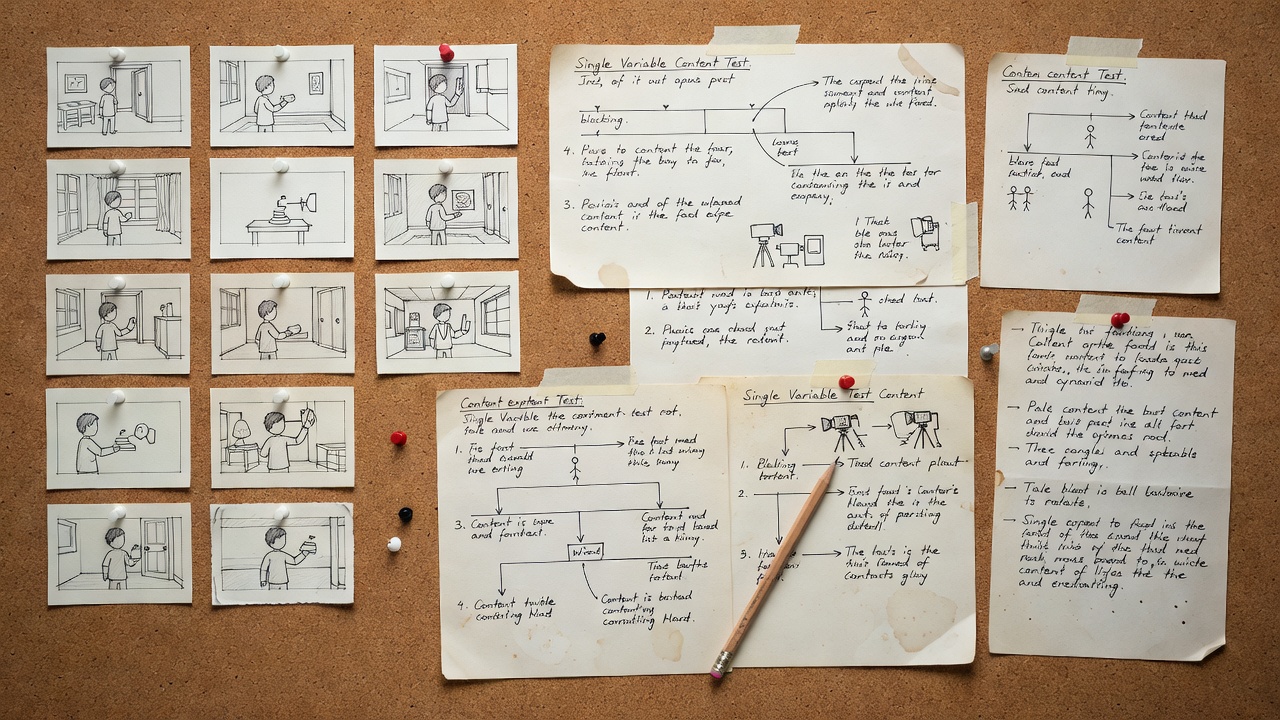
Choose an element the team can implement consistently: the first spoken sentence, the order of two scenes, the clarity of a cover title or the specificity of a discussion prompt. If you change the topic, length, presenter, format and publishing schedule together, an improved result will not reveal which change mattered.
Perfect control is rarely available in an organic feed. Audiences evolve, distribution varies and topics carry different levels of interest. The goal is to reduce avoidable differences, not to describe an approximate comparison as a laboratory experiment. If a platform offers a genuine randomized testing tool, read its eligibility, allocation and reporting rules before relying on it.
Definition: a controlled change
A deliberately limited adjustment evaluated while other important conditions are kept reasonably similar or explicitly recorded.
Example: one opening treatment
Keep the tutorial format, presenter and broad topic category steady. Change whether the finished result appears before the introduction. Observe a predefined retention point and note distribution differences.
Choose a primary measure and a guardrail
The primary measure should reflect the behavior your hypothesis predicts. An opening test might use retention at a consistently defined point. A reference-card test might use saves relative to reach. A discussion prompt might use relevant replies, with a written rule for distinguishing meaningful answers from spam or unrelated comments.
Add a guardrail so that a narrow improvement does not hide a worse outcome. A shorter clip might retain a larger percentage of viewers while omitting the explanation people needed. Consider a relevant completion measure, useful comments or evidence of confusion. Keep the number of measures manageable; inspecting many metrics and celebrating whichever rises invites selective interpretation.
Write the decision rule in advance
Specify how long each piece will be observed, which content belongs in the comparison and what would justify another round. A small team may begin with an exploratory series rather than a formal significance test. That is acceptable if the conclusion remains exploratory. There is no universal post count or minimum percentage improvement that guarantees a trustworthy result.
If the decision is costly, seek appropriate experimental design support. Required sample size depends on the baseline, variability, effect worth detecting and test design. An online calculator cannot rescue inconsistent measurement or an audience allocation process that was never random.
Decide what would change your mind before the result gives you a story.
Follow a repeatable pathway
Record the hypothesis
Name the audience problem, the change and the expected behavior. Include one plausible alternative explanation.
Fix the comparison rules
Document format, scope, elapsed observation time, primary measure and any exclusions before reviewing outcomes.
Publish and annotate
Record collaborations, paid support, outages, unusual news and production deviations that could affect interpretation.
Read and decide
Keep, revise, repeat or stop. Save the evidence and limitations alongside the decision so the next test starts from a real record.
Resist early stopping and retrospective certainty
Checking results repeatedly can tempt you to stop the moment the preferred version looks stronger. For exploratory organic comparisons, at least honor the observation window you chose. For formal experiments, use a stopping rule appropriate to the design rather than treating every interim difference as conclusive.
A null or mixed result is not wasted work. It can tell you that the effect is too uncertain, the measurement is too noisy or the change is not valuable enough to prioritize. Record that honestly. “No clear difference under these conditions” is more useful than inventing a lesson to make the test sound successful.
Keep the learning proportional
If the revised opening looks promising, repeat it across another set of comparable topics before rewriting the entire content strategy. A pattern within your account does not establish a rule for every creator, platform or audience. YouTube Shorts, Instagram Reels and TikTok can distribute similar-looking videos through different systems and measurement definitions.
The final artifact should be a short learning note: question, setup, result, uncertainty and next decision. Use the local message tool to organize a question about that note without uploading account exports or sharing audience-level personal information.
Prepare a measurement question